00:00 AM
Under preparation



Currently, Narita Airport is advancing “The New Narita Project,” which includes constructing new runways, extending existing ones, consolidating into a single terminal, developing a new cargo area, and enhancing airport access. Building on this project, initiatives are underway around the airport to realize an airport city, focusing on establishing logistics and industrial hubs, as well as improving and strengthening surrounding access.






Narita Airport, Japan's gateway, is now undergoing a major transformation.
The new 3,500-meter Runway C and the
extended 3,500-meter Runway B.
With these two runways completed, annual flight slots are expected to increase from
300,000 to 500,000,
passenger numbers are projected to nearly double to approximately 75 million,
and cargo volume is
anticipated to rise by 50% to about 3 million tons.

Toward an international hub airport representing Asia, where people and goods flow freely.
Narita Airport's potential expands significantly.
OUR VISION
Developing the area into a “future-oriented airport city” that captures global growth and drives the revitalization of the Japanese economy and the sustainable development of the community.
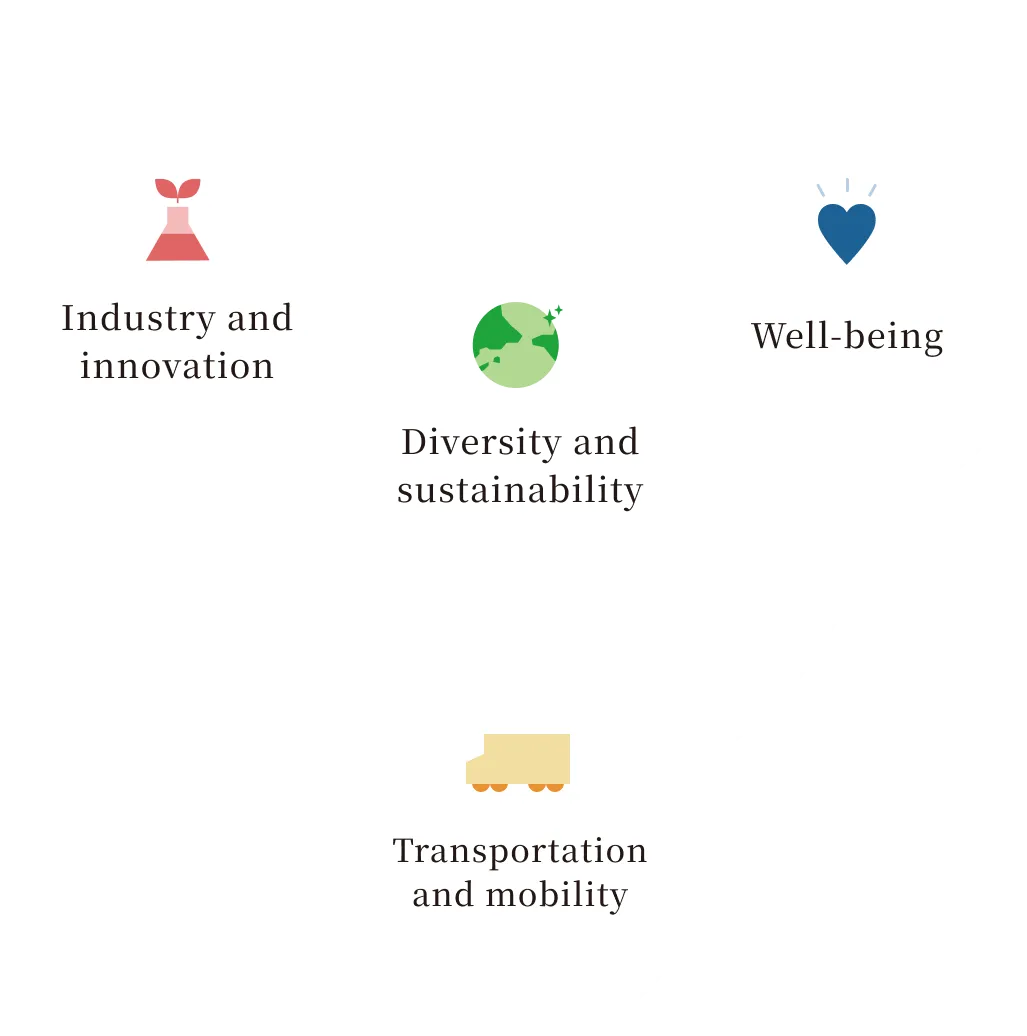
The fusion of four approaches to realize this vision will create a future-oriented city that combines international competitiveness with sustainability.
In order to capture the growth of the world and Asia, the Project will invite a broad array of promising industries with high added value, including aircraft MRO (maintenance, repair, and overhaul), life sciences, advanced logistics, and global research and development facilities to create a new economic area centered around the airport.
The Project will develop residential, educational, and healthcare environments where diverse people, including not only airport workers but also researchers, foreign workers, and entrepreneurs come together and can work, live, and raise children with a peace of mind. In particular, the Project aims to develop environments where high-quality housing, global education, healthcare services, and cultural facilities are available with the aim of creating a residential area and landscape attractive for people who create new value for our society.
The Project will use the reorganization of the airport as an opportunity to carry out the restructuring of the mobility system in accordance with transportation demand at the airport and the surrounding area after the enhancement of the airport’s functions. This means that the airport can not merely function as an air transportation gateway but also serve as a mobility hub that links the Airport City Area with cities and regions. The restructuring will include strengthening railway transportation capacity, building a logistics network through the development of a cross-regional network of main roads, and realizing a park and ride bus system.
The Project will realize an “inclusive society” where local residents, foreign workers, and various generations of people live together and promote the development of a community with a reduced environmental footprint. It will pursue a growth model that achieves harmony betweenthe environment and development by, for example, introducing renewable energy, creating green infrastructure, and developing carbon-neutral facilities.
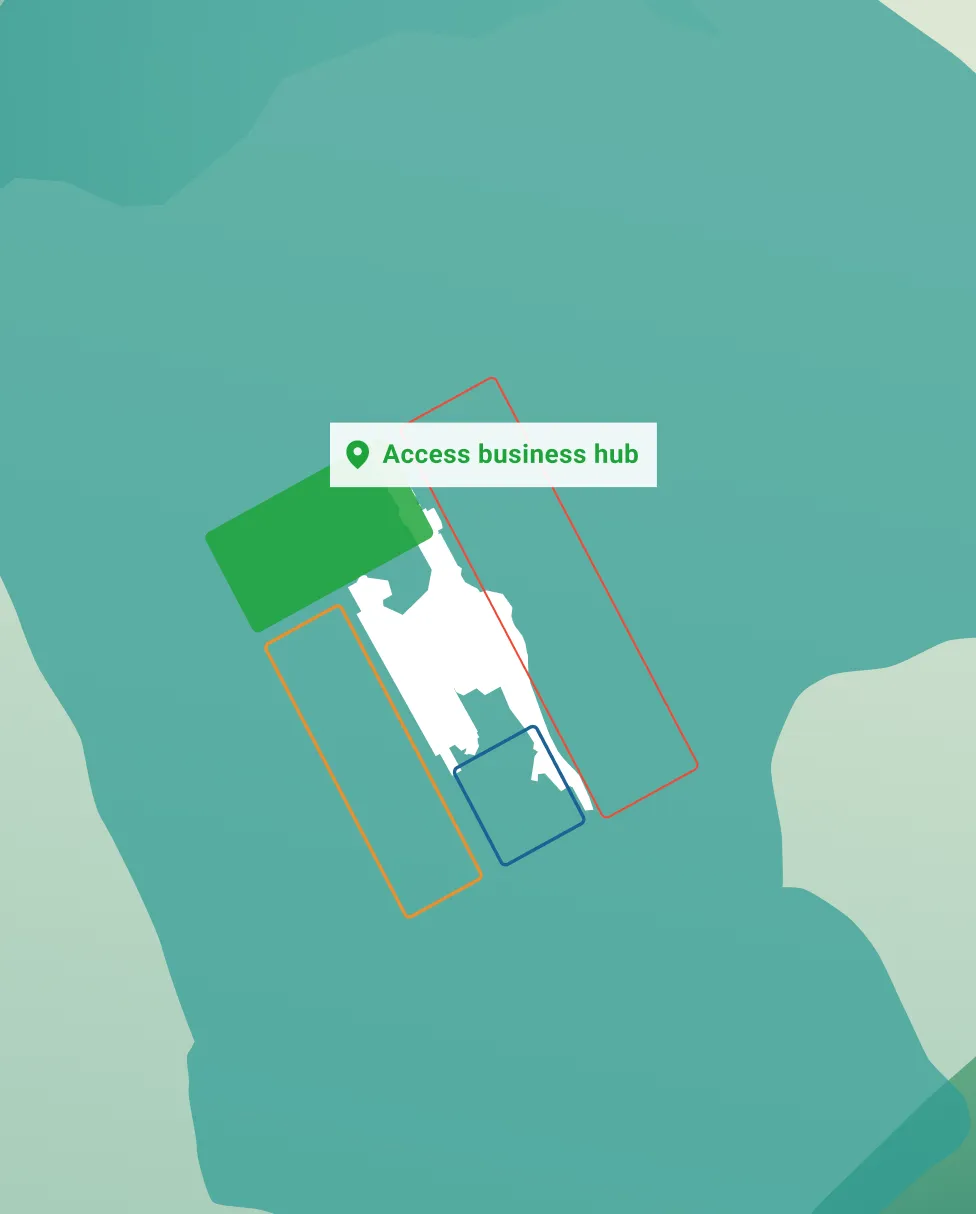
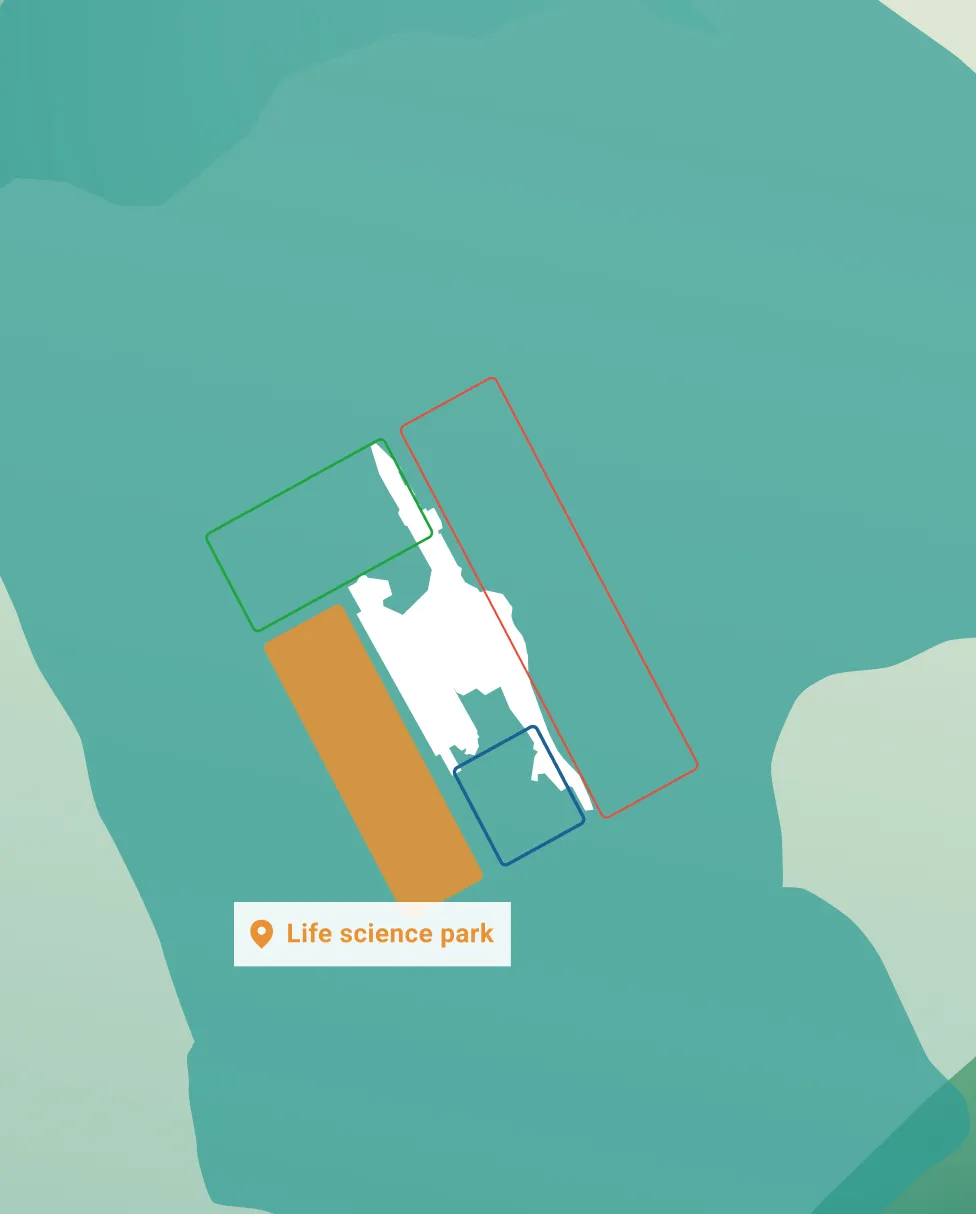
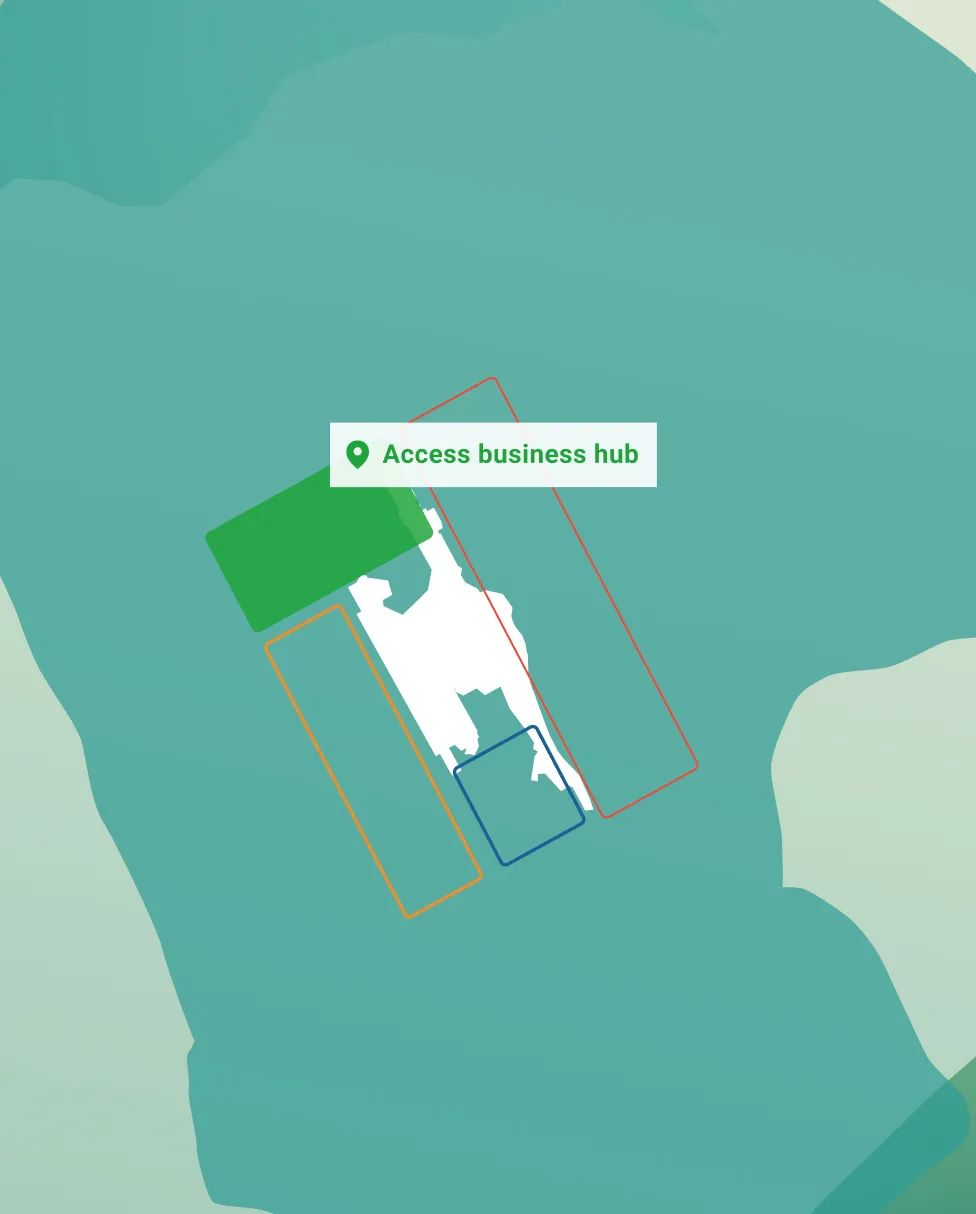
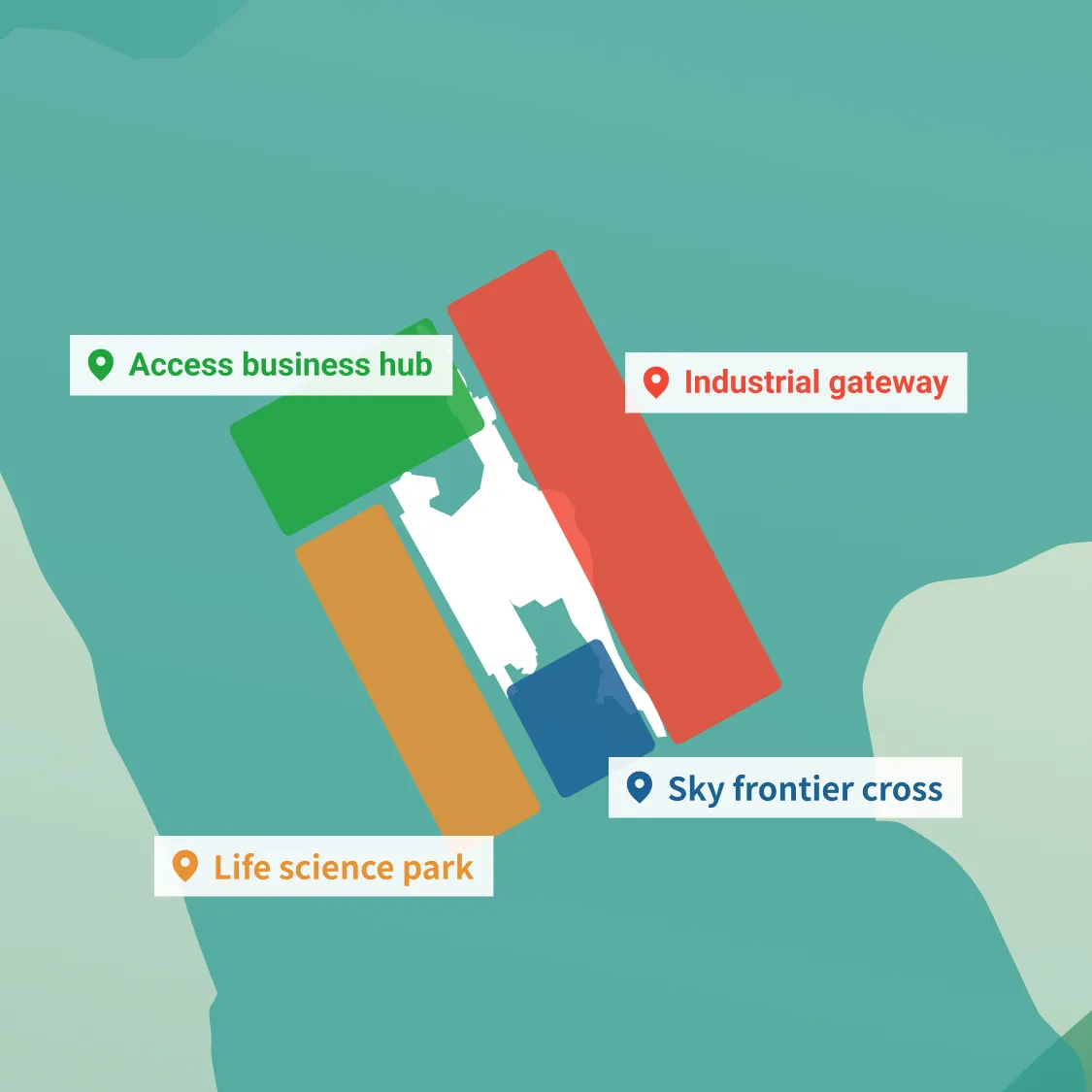
SORATO NRT Airport Area
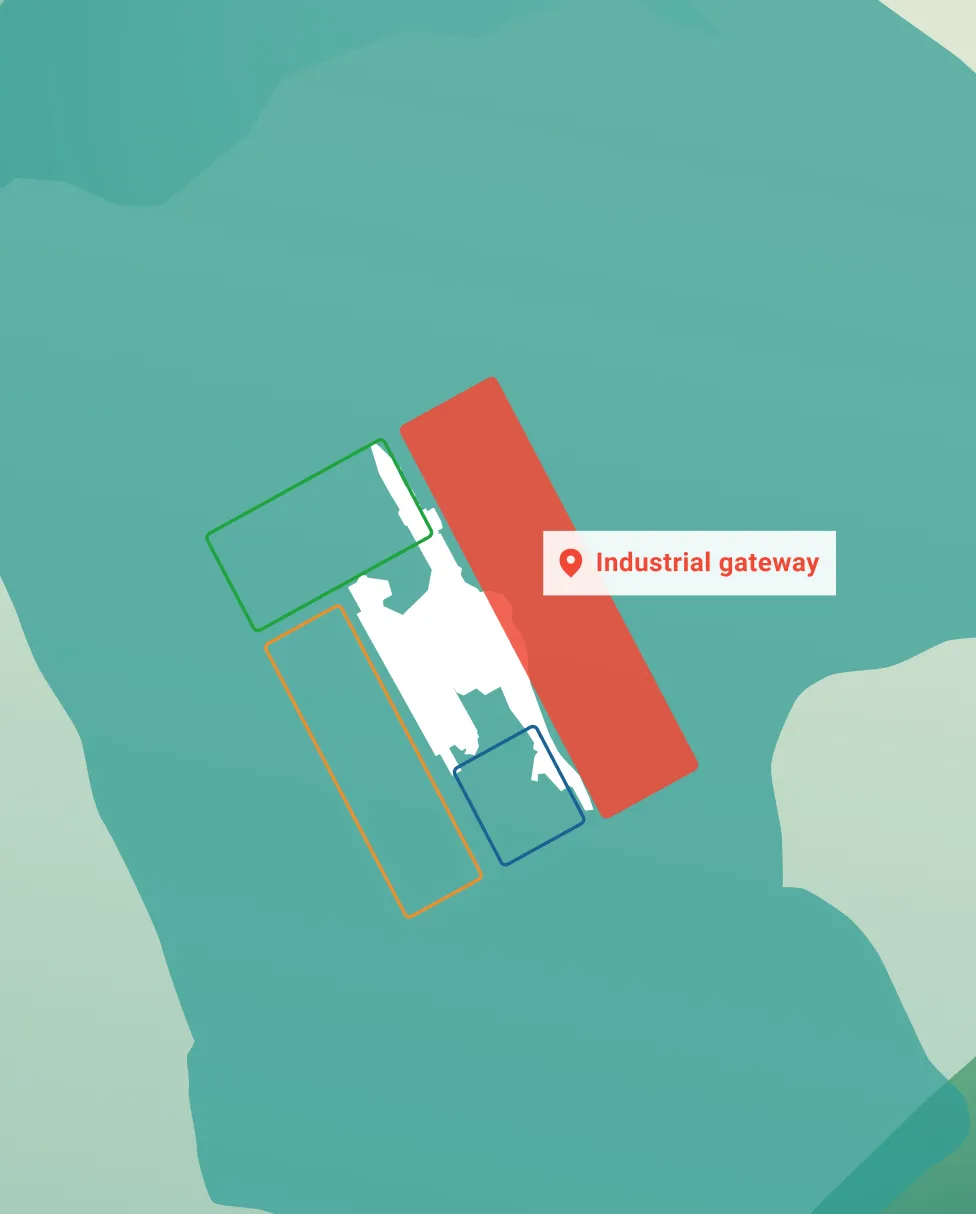
The four zones within the Airport Area will work together to drive the growth of the airport and the whole of the Airport City Area

A complex zone where logistic and industrial functions and an export hub for agriculture with high added value coexist
Multiple ICs located along the Ken-O Expressway, the new cargo area, the international logistic hub, and the public wholesale market of Narita City will work together to create a complex industrial hub where an international industrial cluster and an export hub for agriculture with high added value coexist.

A cluster zone mainly for the aerospace industry with an advanced industrial hub and an accumulation of training facilities.
This is a zone for advanced industries, including aerospace, that complements the airport functions, mainly in terms of maintenance, repair, and aviation workers. We will also consider collaboration with the Kujukuri Beach region.

A cluster zone for life science businesses centered around healthcare and research development facilities
A city model that prioritizes well-being will be realized through the integration of healthcare, research, and residential environments by taking advantage of the presence of healthcare facilities and a residential hub in the neighborhood, and the zone’s locational advantage of lying along railway lines.

An exchange hub zone equipped with business functions and accomodation functions
This zone is an urban hub that is located near the downtown area of Narita City and is equipped with accomodation, parking, and business functions. The zone will form a hub of exchange with the Tokyo Metropolitan Area and the Hokuso region by taking advantage of cross-regional access.
SORATO Network
Organically linking industrial, residential, and tourism hubs in the various areas
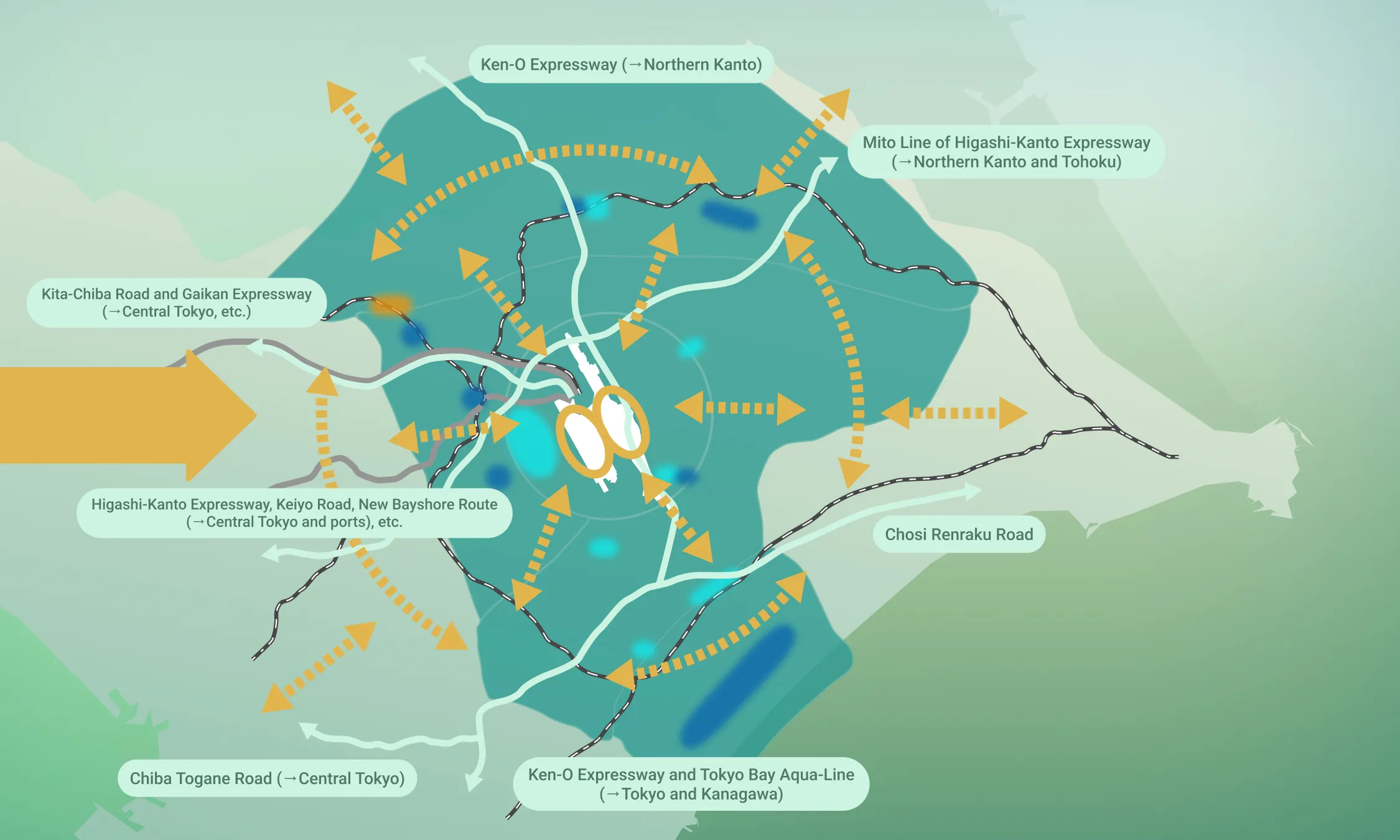
Action Package
Narita Airport, the gateway to Japan and the Tokyo metropolitan area, serves as a pivotal hub connecting North America and Asia. It links to 123 cities worldwide (including 18 domestic cities), making it a focal point for people, goods, and investment from across the globe.
Furthermore, it is Japan's largest trade port, ranking first nationally in both export and import value, accounting for approximately 17% of the nation's total import and export volume.
Haneda Airport's annual flight capacity has already reached approximately 490,000 movements. As the Greater Tokyo Area airports seek to capture the vibrant economic activity centered on Asia, the role of Narita Airport—where expansion projects are underway to increase annual capacity to 500,000 movements—is becoming critically important.
| The New NARITA |
Expansion Project for Narita Airport |
|---|---|
| Passenger terminal reconstruction New cargo area development |
|
| Enhancement and strengthening of airport access |
Improving rail access to Narita Airport |
| Road network development | |
| Formation of a logistics industry hub centered on Narita Airport |
Clustering of industries that benefit from being located near airports |
| Designating the entirety of Chiba Prefecture as a National Strategic Special Zone | |
| Enhancement of subsidies for attracting businesses | |
| Area Design Chosen as a Hub for Living and Industry |
Formulation of the SORATO NRT Airport City Project |
NEWS
EVENT